
"Ecuadorian espresso"
300 article(s) found

A brief introduction to the planting Market Price of Ecuador's Fine Coffee Bean varieties with mild aroma
In addition, creative coffee made from Ecuadorian coffee beans with unique flavor is also popular with consumers. Mr. Veniso, the champion of the 2014 Ecuador Coffee Competition, won the Ecuador Coffee Competition with his creative formula. One espresso has a fresh and unique taste with mint grass from the Amazon, while the other adds Rolls in roses

Introduction to the Coffee Flavor and Taste of Santa Cruz Manor in Ecuador
The Arabian Coffee Tree was first introduced to Ecuador (Ecuador) in 1952 and its coffee is of good quality, especially the coffee harvested in early June. Ecuadorian coffee beans can be divided into two varieties: Galapagos and Gigante, both of which have the characteristics of large granules and heavy weight. Ecuadorian coffee can be divided into first class (No.1) and super excellent (ExtraSuperior) according to its quality.
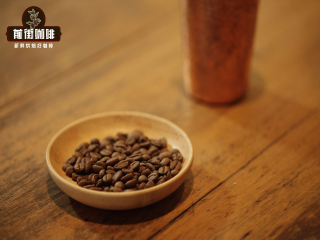
What are the characteristics of Ecuadorian coffee producing areas? is the Ecuadorian coffee variety Arabica?
Professional coffee knowledge exchange more coffee bean information please follow the coffee workshop (Wechat official account cafe_style) front street-Ecuador Coffee introduction Ecuador is one of the few countries in South America that produces both Arabica coffee and robusta coffee. It is located between Colombia and Peru in South America.

The taste of Ecuadorian coffee is mild. The characteristics of the manor area introduce the fine coffee of Ecuador.
Ghana Pagos coffee is produced at an average altitude of 300 meters above sea level. It has different tastes, it is not so sour and bitter, it tastes very good, it is mild, it tastes slightly sweet and floral, and it is very easy to taste. It is a very good choice for guests who are just starting to drink coffee. For drip-filtered coffee that wants to make and taste pure aroma and taste, I recommend you try Ghana

Aromatic and aromatic Ecuadorian fine coffee beans Flavor Taste Aroma Description Introduction
It wasn't until the early 1990s that the Gonzalez family bought Hassenda Coffee Plantation. Local microclimates, intense equatorial sunlight and rapid temperature changes (43 ° C at sea level and 10 ° C to 16 ° C at 275 m above sea level) caused by the Humboldt Current provided unique favorable conditions for the Gonzalez family to expand.

Ecuador Coffee Manor introduction to Santa Cruz Manor planting environment
Ecuador is one of the few countries in the world that can provide Arabica and robusta coffee. Robusta coffee is mainly produced in the Ecuadorian jungle and seaside areas and is mainly used to produce instant coffee. for buyers who want to buy instant coffee in large quantities, Ecuador can be another choice for you, David, the new champion coffee from Ecuador.

A brief introduction to the planting market price of fragrant Ecuadorian boutique coffee beans
In 1875, 340 years after Freitoma de Belanga discovered the island, a native named Kovos came to St. Cristobal, where he established the Hasunda Coffee Garden and planted about 100 hectares of Arabian bourbon coffee trees. As the plantation is located between 140m and 275m above sea level, the climate is equivalent to that between 915m and 1830 m in the interior.

Ecuador Coffee Plantation Flavor Taste Features Hasenda Coffee Plantation
When it comes to Ecuadorian coffee, you have to mention the organic coffee of the Galapagos Islands in Ecuador. Galapagos Islands is a famous tourist attraction, declared a world natural heritage by UNESCO, extremely rich in products, organic coffee is one of the unique. Local fertile volcanic soil, micro-climate and other unique ecological environment, coupled with its non-

Fruit aroma of Ecuadorian Coffee Manor flavor and taste characteristics of boutique coffee beans
Ecuador is divided into the western coast, the central mountains, the eastern Amazon River basin and the four central regions of the Galapagos Islands, with diverse climatic conditions. The western coastal plain belongs to the tropical rain forest climate, with an average temperature of 23-25 ℃. The central Andes. The intermountain basin in this area belongs to the savanna climate, and the mountain belongs to the subtropical forest climate, with perennial snow above 4000 meters above sea level. Annual average decline

A brief introduction to the cultivation of fragrant Ecuadorian boutique coffee beans, geographical location, climate and altitude
In fact, Ecuador means the Spanish equator. Due to the use of old-fashioned traditional harvesting and handling methods, Ecuadorian coffee is not listed as a boutique coffee, so it is generally rarely seen. Ecuador faces the Pacific Ocean, and near the equator, about 900km west of longitude 90 degrees, there is a Galapagos archipelago (Galapagos Island).

A brief introduction to the market price of Ecuadorian boutique coffee beans with balanced and refreshing taste
St. Cristobal is a larger island in the Galapagos archipelago. At 410m above sea level, there is a small lake called El.Junco, which forms streams along the rocks and volcanic rocks on the southern slope of the island. Mineral-rich fresh water moistens the land of St. Cristobal, keeping the soil moist and fertile. For here.

A balanced and refreshing Ecuadorian fine coffee bean. Grindness. Roast degree.
Ecuador also produces coffee locally. Because the Andes pass through from the middle, coupled with sufficient precipitation, suitable temperature and abundant light under the influence of tropical climate, Ecuador's coffee grows very well. Gigante and Galapagos coffee are the best in coffee, although Ecuador grows Arabica coffee locally.

A slightly sweet and floral Ecuadorian coffee estate with a taste of flavor and taste characteristics
Western coastal areas: including coastal plains and foothills, east high west low, generally below 200 meters above sea level, there are some hills and low mountains 600~700 meters above sea level. Tropical rain forest climate, the southernmost start to transition to a savanna climate. The annual average precipitation decreases from more than 3000 mm to about 500 mm from north to south. The Andes range from Colombia to Ecuador.

Introduction of Ecuadorian coffee with fresh and unique taste
In the mid-15th century, there were legends about enchanted mysterious islands among fishermen fishing in the western Pacific Ocean of South America. It is said that the islands can sometimes be seen clearly from a distance, but when the ship approaches, it disappears again; sometimes it looks like a galleon, sometimes it shows the shape of a witch. The fishermen called these islands Magic Island and thought it was there.
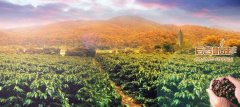
A brief introduction to the treatment method of grinding degree and baking degree of fragrant Ecuadorian boutique coffee beans
Ecuador faces the Pacific Ocean, and near the equator, about 900km off its west coast, near the equator at 90 degrees west longitude, there is also a dependency of the Galapagos Islands (Galapagos Island), also known as Cologne, which produces the famous Galapagos coffee. In order to protect the natural ecology, the Ecuadorian government has designated the archipelago as a national park and banned the use of chemical fertilizers, pesticides and other chemical agents.

A brief introduction to the planting situation of Ecuadorian boutique coffee beans with mild aroma, geographical location, climate and altitude
Known as the country of Coffee, the coffee world is between Colombia and Peru, and Ecuador, which passes through the equator, is one of the few countries in South America that produces both Arabica and Robastian coffee. In fact, Ecuador means the Spanish equator. Due to the use of old-fashioned traditional harvesting and handling methods, Ecuadorian coffee is not listed as a boutique coffee.

A brief introduction to the cultivation of Ecuadorian boutique coffee beans with fresh taste, geographical location, climate and altitude
When it comes to Ecuadorian coffee, we have to mention the organic coffee in the Galapagos Islands of Ecuador. The Galapagos Islands is a famous tourist attraction, declared as a World Natural Heritage site by the United Nations Educational, Scientific and Cultural Organization (UNESCO). It is extremely rich in products, and organic coffee is a unique one of them. The local fertile volcanic soil, micro-climate and other unique ecological environment, coupled with its lack of

A brief introduction to the treatment method of grinding degree and baking degree of balanced and refreshing Ecuadorian fine coffee beans
Galapagos Islands coffee flavor is more balanced and neutral, moderately mellow, with a little obvious but pleasant acidity, with a special aroma. However, because it is rarely seen on the market, not many people talk about this coffee in the mid-15th century, and there are legends about enchanted mysterious islands among fishermen fishing in the Pacific Ocean in western South America. It is said that those islands have

A brief introduction to the cultivation of Ecuadorian boutique coffee beans with balanced and refreshing taste, geographical location, climate and altitude
When Thomas and the crew landed on the island, they were frantically looking for water and were so thirsty that they squeezed juice from the fat leaves of the cactus to drink. At last a source of water was found in a rocky gully. Thomas attributed it to the gift of God, because it was good Friday, and they had piously celebrated mass before they set out in search of water. But Thomas will never

Ecuador Coffee Plantation Flavor Taste Introduction Hasenda Coffee Plantation
David Mino, a new champion barista from Ecuador, carefully prepared the original Ecuadorian coffee on site and led friends on the spot to enjoy a trip to Ecuador. From the surprisingly soft taste of Galpagos coffee, to the sour and bitter taste of LOJA in Ecuador, to the softer taste of Garpagos coffee and mouth